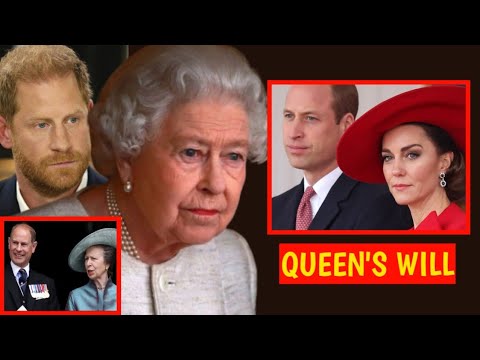
When Queen Elizabeth II passed away in 2022, the world mourned not just the loss of a monarch, but the end of a significant era in British history. As the public reflected on her remarkable life and reign, curiosity naturally turned to the legacy she left behind—not only in the form of crowns, estates, or priceless jewels, but also in the deeply personal connections and symbols of heritage she passed on to her family. Each royal family member received something unique, reflecting their specific role in her life and their standing within the royal institution. The question many asked was simple: what did each of them inherit, and what did those inheritances say about the Queen’s relationships with them?
Queen Elizabeth’s legacy was more than material wealth. It embodied a rich blend of tradition, memory, duty, and symbolism. She left behind a multifaceted inheritance, not merely in monetary terms but also through gestures that carried immense emotional and symbolic value.
These inheritances varied, with some family members receiving grand estates or valuable jewels, while others were gifted roles of symbolic importance or personal mementos with emotional significance. Let’s delve into the various legacies she left behind for her children, grandchildren, and great-grandchildren—and what these choices reveal about her affections and judgments.
Princess Anne, often regarded as the Queen’s most devoted child, was a reflection of her mother’s values. Known for her unwavering dedication to royal duty, Anne mirrored the Queen’s work ethic and sense of responsibility. Unlike her brothers, she kept a low profile, quietly becoming one of the hardest-working royals. Upon the Queen’s death, Anne received a share of the Sovereign Grant—a fund used to support official royal expenses—which she shared with her brothers, Prince Andrew and Prince Edward.
Though the exact amount wasn’t made public, it was clear this financial support was intended to sustain their roles in the monarchy. However, Anne’s inheritance may have extended beyond money. Her deep bond with her mother, combined with her loyal service, likely earned her symbolic responsibilities within the royal household. For example, her prominent position during the Queen’s funeral led to speculation that she might assume a more visible and significant role in the monarchy going forward. As the royal family evolves, Anne’s steadfast presence may prove even more essential.
In contrast, Prince Harry’s inheritance reflected the complexity of his relationship with the monarchy. After stepping back from royal duties with his wife Meghan Markle, many questioned what, if anything, he would receive from his grandmother. Official sources confirmed that Harry was not a beneficiary of Queen Elizabeth’s personal estate or the $100 million bequeathed by the Queen Mother. Still, Harry was not without financial support. He had already inherited roughly $10 million from his late mother, Princess Diana, which he accessed on his 25th birthday.
Additionally, he benefited from a trust fund set up by the Queen Mother, with staggered disbursements beginning at age 21 and continuing into adulthood. These funds helped Harry and Meghan establish financial independence after they were cut off from royal funding in 2020. While the Queen’s decision not to include Harry in her will raised eyebrows, some saw it as a reflection of the Royal Family’s pragmatic stance—that choices carry consequences, and stepping away from the institution also meant stepping away from its privileges. Nevertheless, Harry remains a significant figure within the broader royal story, especially through his children, Archie and Lilibet, who may still receive symbolic or practical links to their royal lineage in the future.
Kate Middleton, now the Princess of Wales and future Queen Consort, was one of the key recipients of Queen Elizabeth’s most treasured personal items—her jewelry collection. Kate is set to inherit an estimated $110 million worth of royal jewelry, including over 300 personal pieces worn by the Queen during her reign. These are not just extravagant ornaments; they are steeped in historical and emotional meaning, representing key moments of the Queen’s life and reign.
From brooches worn at state functions to elegant tiaras displayed at diplomatic receptions, each piece carries with it a story and a legacy. This inheritance signals the Queen’s trust in Kate, her appreciation of her grace under pressure, and her confidence in Kate’s future as a royal leader. However, not all jewels are going to Kate. The iconic Spencer Tiara, famously worn by Princess Diana, is reportedly being held for Princess Charlotte, William and Kate’s daughter. This thoughtful gesture preserves Diana’s legacy and ensures that it continues to shine in the next generation.
Meghan Markle, Duchess of Sussex, did not receive any significant inheritance from the Queen. Given the couple’s departure from royal duties and the tensions that followed, this decision did not come as a surprise to many. Reports confirmed that Meghan would not receive jewelry from the Queen’s collection. Rather than being an oversight, this omission was interpreted by some as a deliberate statement about the couple’s distance from the monarchy.
Nevertheless, Meghan and Harry are charting their own path, pursuing media ventures and charitable work in the United States. Although excluded from royal inheritances, Meghan’s future is far from uncertain. Moreover, there remains the possibility that family ties could be restored over time, and their children, particularly Lilibet—named after the Queen’s own childhood nickname—may yet inherit something symbolic in the future.
Prince William, the direct heir to the throne, inherited one of the most significant assets from Queen Elizabeth: the Duchy of Cornwall. Valued at approximately $1.2 billion, the estate includes around 140,000 acres of land across the United Kingdom. This vast property portfolio not only provides substantial income but also serves as a cornerstone of the monarchy’s financial independence.
William now oversees a range of operations, from sustainable farming to commercial ventures and charitable activities. Inheriting the Duchy was not merely a financial transaction—it was a powerful symbol of continuity and responsibility. The Queen entrusted William with this estate as a way of preparing him for kingship. His stewardship will demonstrate his ability to balance tradition with innovation, a skill essential for a modern monarch. The challenge for William lies in how he will prepare his own children, especially Prince George, for the enormous responsibilities that come with royal life.
Among the Queen’s children, Prince Andrew’s inheritance was perhaps the most unusual—and sentimental. Amid controversies and public criticism, Andrew received two of the Queen’s beloved corgis, Muick and Sandy. These dogs were more than just pets; they were faithful companions to the Queen throughout her life. Entrusting them to Andrew reflected a deep level of personal trust and affection.
While not a financial windfall, this inheritance highlighted the Queen’s emotional side and her desire to preserve her close bonds even beyond death. Caring for her corgis offered Andrew a quiet, humanizing role—perhaps a subtle path to rebuilding public trust, or at least honoring his mother’s memory in a tangible way.
Prince Edward, the Queen’s youngest son, is often referred to as the royal family’s “quiet rock.” Like his siblings, he received a share of the Sovereign Grant, helping support his public duties. However, Edward’s inheritance likely included more than finances. His consistent loyalty and discretion may have earned him titles or responsibilities within the royal family that reflect the Queen’s confidence in his stability. As the monarchy adapts to a new era under King Charles III and prepares for a future led by Prince William, Edward may play an increasingly important role behind the scenes, offering support and continuity.
In the end, Queen Elizabeth II’s legacy was not defined by jewels, estates, or official titles alone. It was defined by the personal messages conveyed through each inheritance—messages of trust, disappointment, affection, and duty. Each member of the royal family received something tailored to their relationship with her and their place in the monarchy’s future. Whether it was a billion-dollar estate, a trove of priceless jewels, or a pair of cherished dogs, these gifts reflected more than wealth—they told stories of family, tradition, and the responsibilities that come with carrying on the legacy of Britain’s longest-reigning monarch.